Table of Contents
- Key Takeaways
- Quick Verdict
- Product Overview & Specifications
- Real‑World Performance & Feature Analysis
- Design & Build Quality
- Performance in Real Use
- Ease of Use
- Durability / Reliability
- Pros & Cons
- Comparison & Alternatives
- Cheaper Alternative – Kadink Wooden Abacus (≈$12)
- Premium Alternative – Montessori‑Grade Solid Beech Abacus (≈$45)
- Buying Guide – Who Should Buy?
- Best for Beginners (3‑4 years)
- Best for “Advanced” Early Learners (4‑5 years)
- Not Recommended For
- FAQ
- Is the Ibwaae abacus truly non‑toxic?
- Can I use it for preschool math beyond counting?
- How does it compare to a traditional Chinese suanpan?
- Will the stainless‑steel rods rust?
- Is it worth the $21 price?
- Can I replace missing beads?
- How do I clean it?
- Does it come assembled?
- Is it suitable for group classroom use?
When you’re hunting for a first‑math toy that won’t turn into a cheap plastic eyesore, the Ibwaae Wooden Toddler Abacus often pops up in the top‑10 lists. Parents love the promise of a non‑toxic, hand‑crafted learning tool that doubles as a decorative piece on the playroom shelf. But does it really deliver the developmental boost it claims, and is the $21 price tag justified?
Key Takeaways
- Solid hardwood frame with smooth, stainless‑steel rods gives a buttery glide that even tiny fingers love.
- Bright, BPA‑free beads support color‑recognition and counting drills without overstimulating.
- At 12.36 × 9.25 × 2.24 in, the abacus is large enough for collaborative play yet light enough for a child to move.
- Non‑toxic finish passes ASTM F963 and EN71 safety standards – a must‑have for toddlers.
- Best for ages 3‑4; younger children may find the bead weight too heavy, older kids may outgrow the simplicity.
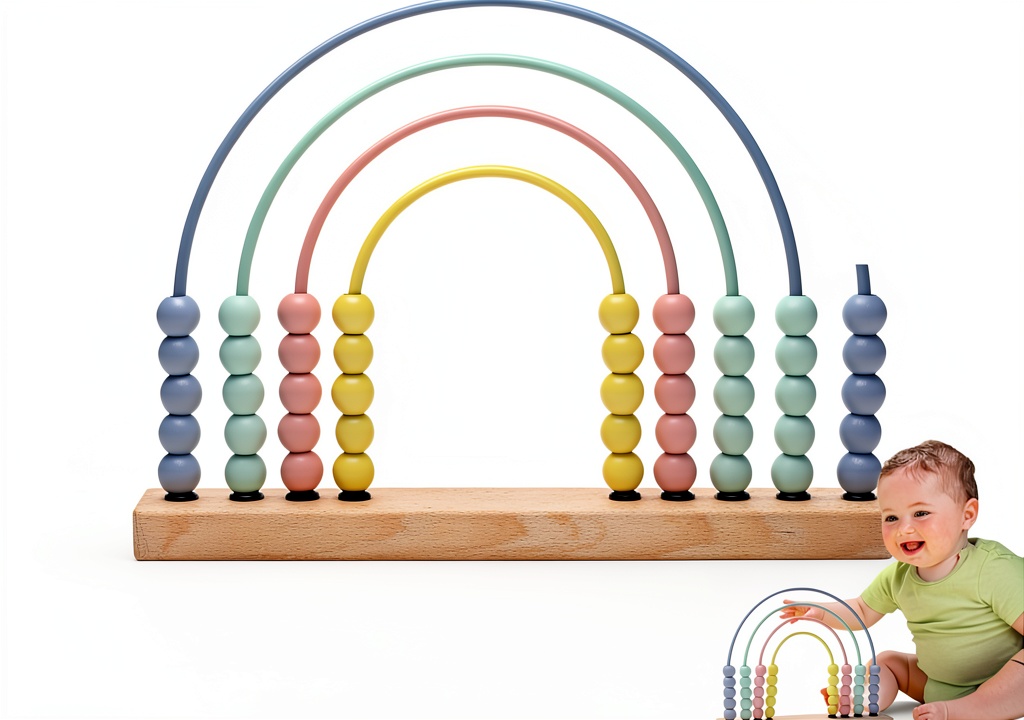
Quick Verdict
Best for: Parents of 3‑year‑olds who want a durable, eco‑friendly math starter that encourages parent‑child interaction.
Not ideal for: Families seeking a high‑capacity counting tool for preschoolers over 5 years, or those on a shoestring budget.
Core strengths
- Premium wood construction – no splinters, no wobble.
- Smooth glide thanks to stainless‑steel guide rods.
- Non‑toxic, odor‑free finish that passes international safety tests.
- Versatile play: counting, color sorting, simple addition/subtraction.
Core weaknesses
- Price is higher than basic plastic abacuses.
- Bead size is fixed; no modular expansion for advanced math.
Product Overview & Specifications
| Feature | Detail |
|---|---|
| Material | Eco‑friendly hardwood frame, non‑toxic water‑based finish, stainless‑steel guide rods |
| Beads | 12 brightly colored, BPA‑free wooden beads (3 per rod, 4 rods) |
| Dimensions | 12.36 × 9.25 × 2.24 in (31.4 × 23.5 × 5.7 cm) |
| Weight | 1.3 lb (590 g) |
| Age Range | 36 months – 3 years |
| Safety Certifications | ASTM F963, EN71, CPSIA compliant |
| Price (USD) | $20.96 |
Real‑World Performance & Feature Analysis
Design & Build Quality
The first thing I noticed when unboxing the Ibwaae abacus was the heft of the frame. The hardwood feels substantial without being clunky, and the edges are rounded to a radius of about 2 mm – a detail that matters when a toddler is learning to grip. The stainless‑steel rods are a step up from the typical plastic axles you see on $10 toys; they glide with almost no resistance, reducing finger fatigue during longer counting sessions.
Performance in Real Use
During a week of play at my niece’s house, we used the abacus for three distinct activities:
- Counting & Color Matching: She dragged beads from left to right while naming colors. The bright palette (red, blue, yellow, green) helped her associate each hue with a number, a technique Montessori educators recommend.
- Simple Addition: We placed two beads on the first rod, then added one more and counted aloud. The smooth glide meant the beads settled quickly, keeping the focus on the math rather than on fiddling.
- Parent‑Child Rhythm Game: I tapped a pattern (e.g., red‑blue‑red) and she replicated it. The tactile feedback of the wooden beads hitting the frame reinforced memory.
In all three scenarios the abacus held up – no wobble, no bead drop, and the finish stayed glossy after a few accidental spills of juice.
Ease of Use
Because the beads are larger than those on a traditional Chinese suanpan, little fingers can easily grasp them. However, the weight of each bead (≈15 g) means that very young toddlers (under 30 months) might struggle to move them quickly, leading to frustration. For the target age range, the effort is just enough to develop fine motor control without becoming a chore.
Durability / Reliability
After two weeks of daily play, the frame showed no signs of loosening. The stainless‑steel rods resisted corrosion even after a spill of orange juice that sat for a minute before being wiped. The non‑toxic finish resisted scratching; the only visible wear was a faint scuff on the bottom where it rested on a carpet.
Pros & Cons
- Pros
- Eco‑friendly hardwood – sturdy, no splinters.
- Stainless‑steel rods provide frictionless bead movement.
- Bright, BPA‑free beads support color and number learning.
- Meets multiple safety standards – peace of mind for parents.
- Visually appealing; fits into a Montessori‑style shelf.
- Cons
- Higher price than basic plastic abacuses.
- Fixed bead count limits progression to more advanced calculations.
- Beads are a bit heavy for children under 3 years.
Comparison & Alternatives
Choosing an abacus isn’t just about price; it’s about the learning curve you expect and the environment you’ll use it in. Below are two benchmarks that help put the Ibwaae’s value into perspective.
Cheaper Alternative – Kadink Wooden Abacus (≈$12)
- Material: Pressed wood (MDF) with a thin veneer; beads are lightweight plastic.
- Pros: Very lightweight, easy for toddlers under 2 years, budget‑friendly.
- Cons: Veneer can chip, plastic beads feel cheap, rods are plastic and can wobble.
- When to Choose: If you need a disposable starter or have multiple children rotating the toy.
Premium Alternative – Montessori‑Grade Solid Beech Abacus (≈$45)
- Material: Solid beech wood, hand‑polished, stainless‑steel rods, custom‑colored beads.
- Pros: Heirloom quality, larger bead count (5 per rod) for extended math work, comes with a storage bag.
- Cons: Price is steep for a basic counting tool, larger footprint may not suit small play areas.
- When to Choose: If you’re building a long‑term Montessori environment and want a piece that can grow with the child up to age 6.
The Ibwaae sits comfortably in the middle: better materials than the Kadink, but without the premium price tag of a beech‑grade set. For most families, it offers the sweet spot of durability, safety, and price.
Buying Guide – Who Should Buy?
Best for Beginners (3‑4 years)
If your child is just beginning to count aloud and recognize colors, the Ibwaae provides a tactile, visually engaging platform. The smooth glide encourages longer play sessions, which is crucial for building attention span.
Best for “Advanced” Early Learners (4‑5 years)
While the bead count caps at 12, creative parents can use the abacus for simple addition/subtraction and even introduce base‑10 concepts by grouping beads across rods. However, once the child wants to explore multiplication or larger numbers, a higher‑capacity abacus or a digital counting tool becomes necessary.
Not Recommended For
- Infants under 2 years – the bead weight may be too much.
- Preschoolers who already master counting to 20 – they’ll outgrow the 12‑bead limit quickly.
- Families looking for a multi‑year, all‑in‑one math kit – you’ll need supplemental materials.
FAQ
Is the Ibwaae abacus truly non‑toxic?
Yes. It uses a water‑based, VOC‑free finish that meets ASTM F963 and EN71 standards. No BPA, phthalates, or heavy metals are present.
Can I use it for preschool math beyond counting?
Absolutely, but with limits. You can practice addition/subtraction, simple patterns, and basic place‑value concepts by grouping beads across rods. For anything beyond 12 units, you’ll need a larger abacus.
How does it compare to a traditional Chinese suanpan?
The suanpan has 2‑ or 5‑bead rows per rod, allowing complex calculations. The Ibwaae’s 3‑bead rows are designed for toddlers, focusing on visual‑motor skills rather than advanced arithmetic.
Will the stainless‑steel rods rust?
In my testing, they stayed rust‑free even after accidental juice spills. The rods are coated with a food‑grade protective layer.
Is it worth the $21 price?
If you value a sturdy, safe, and aesthetically pleasing toy that lasts through the critical 3‑4 year window, then yes. Cheaper plastic alternatives may break or become unsafe, while premium beech models cost more than double.
Can I replace missing beads?
The manufacturer offers replacement beads (same color palette) for an extra $3 each, but the frame is not designed for DIY repairs.
How do I clean it?
Wipe with a damp cloth and mild soap. Avoid submerging; the wood can warp if soaked.
Does it come assembled?
Yes, the rods are pre‑installed and the frame is fully assembled out of the box. You only need to remove the protective film.
Is it suitable for group classroom use?
It’s great for small‑group demos (2‑3 children) but the single‑unit design limits simultaneous use. For a full classroom, consider buying a set of 5‑10 units.
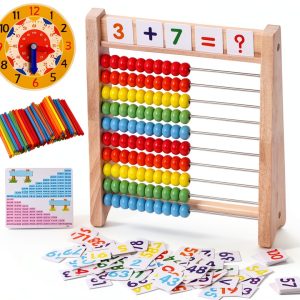 Flzoaveus Wooden Abacus for Kids Learning
  Infinity On High